5 Ways To ‘Stretch’ Food Like a Wartime Home Cook
Moose Jaw North Battleford Saskatoon Yorkton
May 25, 2022
Categories:
Food Rationing
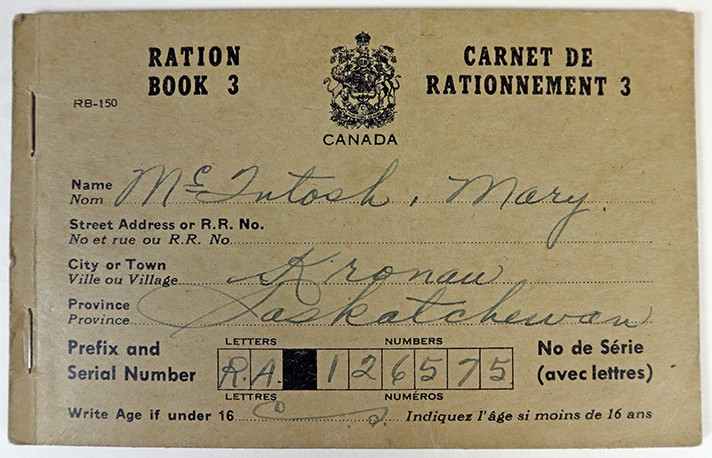
During the Second World War, many resources were diverted to the war effort. Rationing was introduced across Canada to make sure everyone got their share and to stop stores from price gouging. Restrictions and rationing affected everything from sugar, coffee and milk, to beer, rubber and gasoline. Even with rationing, stores sometimes ran out of items. The WDM’s Collection has multiple artifacts that help tell the story of wartime rationing in Saskatchewan.

Here are 5 ways Saskatchewan residents adjusted to and overcame rationing and shortages at home.
1. Making butter spread farther
To make butter rations last longer, people thinned butter, used lard instead, or made “butter spread” by mixing butter with other ingredients like gelatin. This butter spread recipe was in an advertisement on page 7 of the May 27, 1943 edition of Regina’s Leader Post newspaper.

2. “Use up, wear out, make do”
Civilians on the home front were encouraged to be frugal with and conserve everything, even clothing. In this ad from page 7 of the August 21, 1943 Leader Post, a dry-cleaning company in Regina encouraged potential customers to take better care of their clothes with dry-cleaning. People also knitted, patched and darned at home rather than buy new clothes.


3. Gardening
Home-grown fruits and vegetables weren’t rationed. If you lived on a farm, you already grew a garden and preserved the produce. In urban areas the government encouraged people to grow more of their own food by growing “victory gardens” to build and maintain national wartime food reserves.


4. Home Canning
This was a time before home deep freezes. Canning was the best way to preserve whatever you grew or bought. Public canning demonstrations and extra rations of sugar for canning encouraged home cooks. The headline on page 9 of the May 6, 1943 Saskatoon Star-Phoenix declared “Canning of Fruit, Vegetable First Line of Home Defence” and praised home canning as good for your health and your wallet.

5. Sugarless Recipes
Sugar was the first food item rationed in Canada in 1942. Home cooks were urged to save syrup from canned fruits, add dried fruit to recipes and use other sweeteners like molasses or corn syrup instead. Some companies published recipe books for low sugar and sugar free recipes, like this one by Cow Brand Baking Soda.


By: Heather Englebert, Research Assistant
