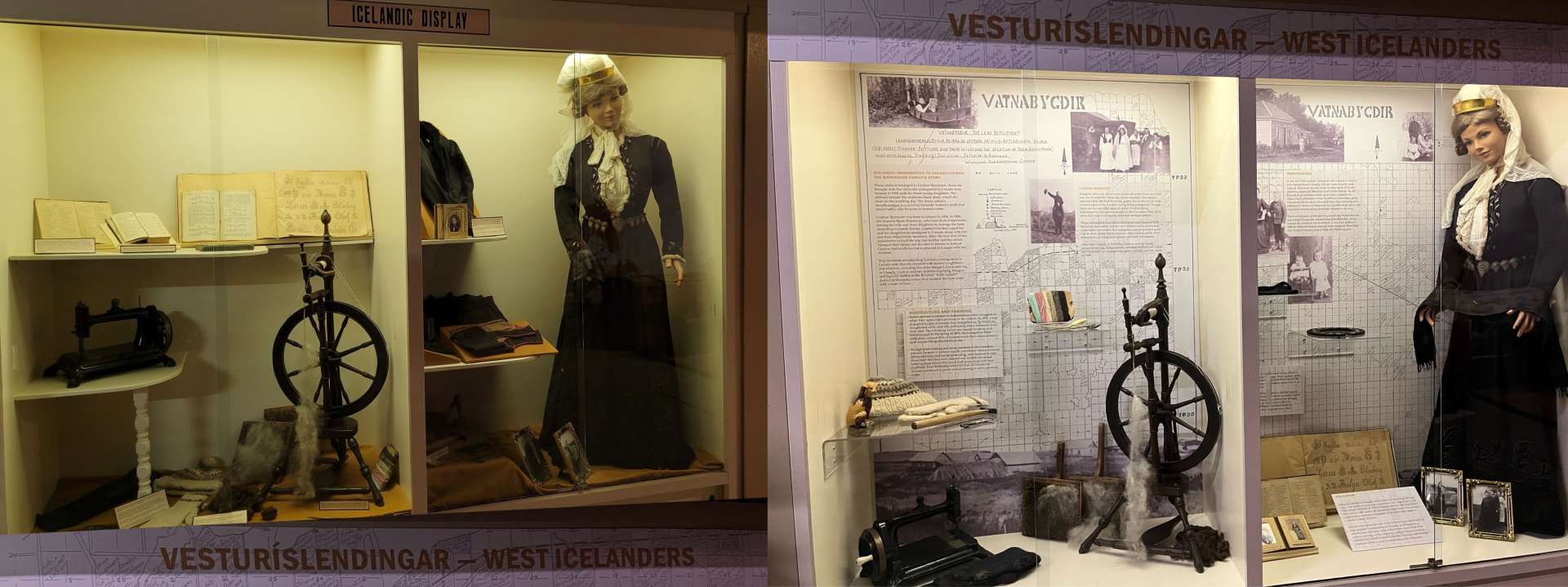
Before and after images of the Icelandic display case in the WDM Yorkton.
By Kaiti Hannah, Curatorial Associate
If you’ve visited the WDM Yorkton recently, you may have noticed the Icelandic showcase has a brighter, refreshed look! This redevelopment was a few years in the making as part of an effort to update and refresh exhibit content across the WDM system.
The exhibit text has been expanded to tell not just the story of Gudrun Bjornsson, the Icelandic woman who originally owned most of the artifacts in this case, but of Icelandic settlement in the Canadian prairies in general. The case was also reorganized so the artifacts are easier to see.
Between 1870 – 1914, it is estimated that over 16,000 people left Iceland, representing about a 20% net population loss for the country. Around 85% of all migrants from Iceland in this period came to Canada, mostly to the prairies. Of the Icelandic settlements in what is now Saskatchewan, many were in the Yorkton area. The first Icelandic settlement within the borders of present-day Saskatchewan was called Thingvalla, located near Churchbridge. It was established in 1885.
This updated showcase touches on topics such as the ways Icelandic farming differed from that of other settlers in Canada, the importance of literacy to Icelandic communities, and why choosing to emigrate from Iceland was sometimes seen as controversial.
Come in to more about Icelandic settlement in the prairies next time you’re at the WDM Yorkton!
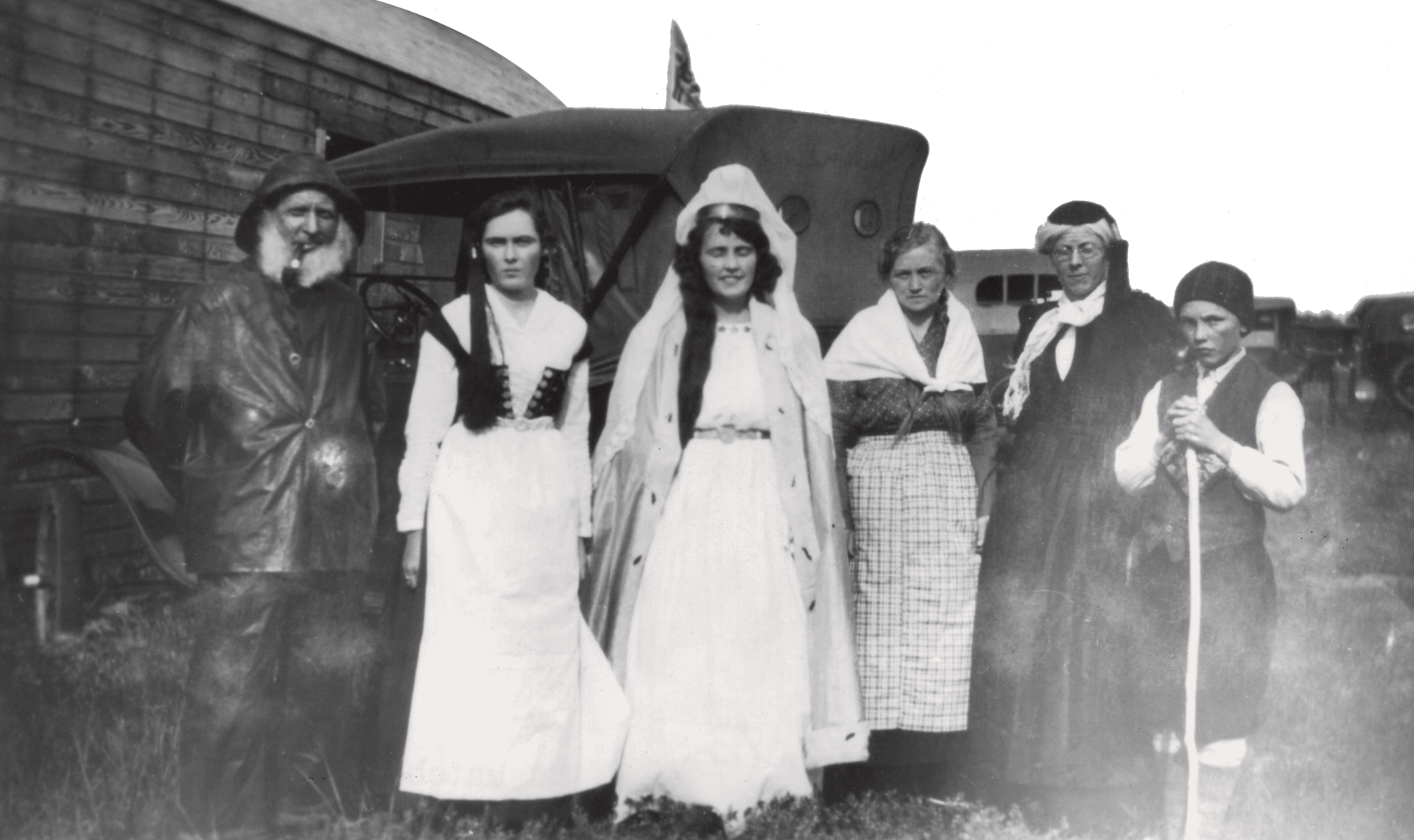
A group of people in traditional Icelandic clothing at Wynyard, c. 1920. Provincial Archives of Saskatchewan R-A18408.
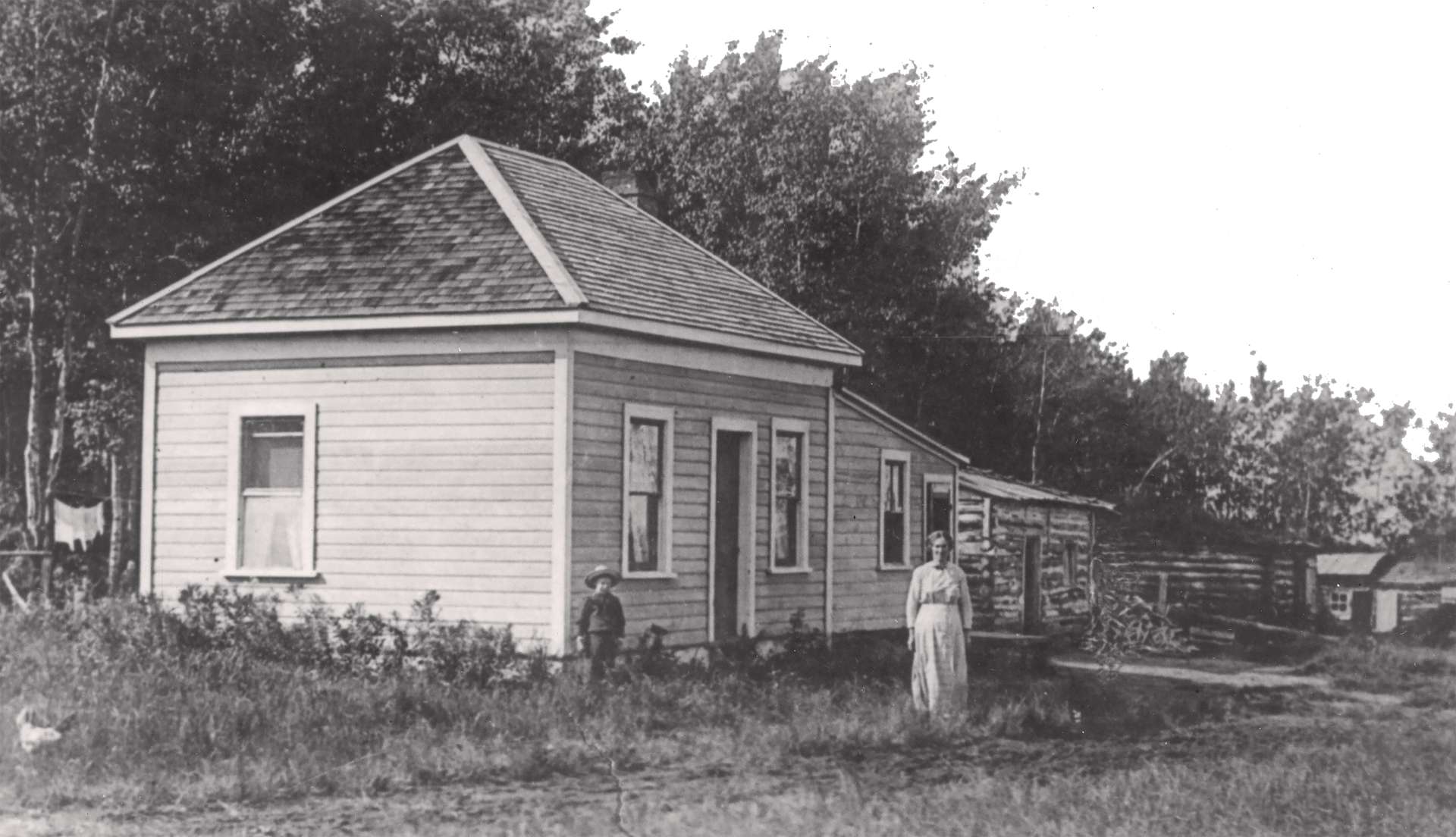
Home of Petur and Gudrun Asmundson near Wynyard, c. 1915. Provincial Archives of Saskatchewan R-A18454.
