History & Timeline
Journey through time: Explore the WDM’s rich history
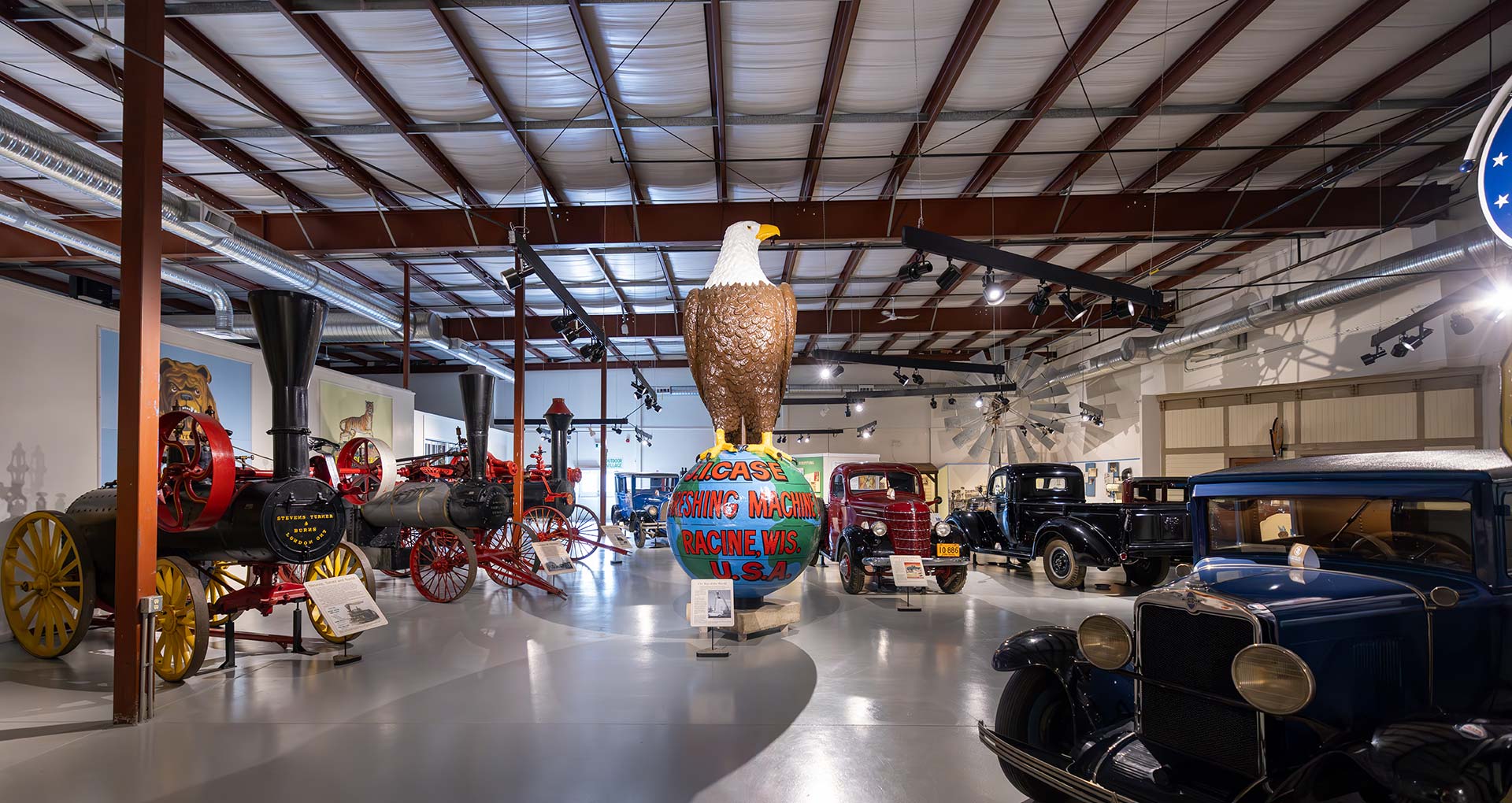
The Western Development Museum had its beginnings in the mid-1940s. At that time, people across Saskatchewan became concerned that the settlers’ farm machinery was fast disappearing. In 1945, the Saskatchewan Government charged the Minister of Natural Resources and Industrial Development with collecting early historic items. The large number of donations led to the establishment of several collection depots, usually surplus aircraft hangars, to store the artifacts. On April 2, 1949 the Saskatchewan Legislature gave royal assent to a bill to create a Western Development Museum.
The hangar in North Battleford opened to the public in 1947, followed by Saskatoon in 1949. In 1951, the federal government requested the return of its hangar at the Saskatoon airport. A surplus hangar was moved from Swift Current and relocated to a site on 11th Street. The hangar in Yorkton was opened to the public in 1951.
The continued growth of the Museum resulted in the need for new facilities. In 1963, the North Battleford location was moved into another relocated hangar on a new site at the junction of Highways 16 and 40. Three years later, a pioneer village was begun at the North Battleford site. In 1972, modern buildings were built for the locations in Yorkton and Saskatoon and in 1976 a new museum was opened in Moose Jaw. To alleviate the constant need for storage and administration space, the Curatorial & Corporate Services Centre was opened in 1984.
WDM through the years
1940
Interested people, working through the Canadian North West Historical Society in the Battlefords, begin to preserve early farm machinery.
1946
The provincial Minister of Natural Resources and Industrial Development, Joe Phelps, provides $10,000 for an agricultural museum to the group in the Battlefords.
1947
Phelps obtains a hangar at the North Battleford airport to store and exhibit the farm machinery collected.
1949
The WDM opens another collection of farm machinery to the public at a hangar at the Saskatoon airport.
April 2, 1949 – The Saskatchewan Legislature passes an act creating the Western Development Museum.
April 21, 1949 – The Board of Directors of the WDM holds its first meeting. The directors are Joe Phelps (Chairman), E.R. Potter, Grant MacEwan, Evan Hardy and Frank Swon.
1951
The Yorkton WDM opens in a hangar at the Yorkton airport.
1952
The Saskatoon WDM moves to a new site on 11th Street West into a hangar moved from Swift Current. A Threshermen’s Reunion is staged as part of the City of Saskatoon’s 70th Anniversary.
1954
In October the Saskatoon WDM holds an Old Time Threshermen’s Reunion. This is the beginning of the WDM’s tradition of "shows" and demonstrations. The Saskatoon WDM’s Threshermen’s reunion is dubbed Pion-Era.
1956
A three-day Threshermen’s Reunion is held in October at the North Battleford WDM. The Board of Directors agree to make a start on a Pioneer Village in North Battleford. The Saskatchewan Tourism advisory council cites the three WDMs as a #1 tourist drawing card in the province.
1957
Airplane hangars in Weyburn and Swift Current are secured for artifact storage.
1958
Hist-O-Rama is staged in Yorkton to celebrate the 75th anniversary of Yorkton. CBC chooses Pion-Era in Saskatoon for their historical broadcast in opening their new coast-to-coast microwave system. Prime Minister, the Rt. Honourable John Diefenbaker, makes an address as part of this historical event.
1959
Her Majesty Queen Elizabeth II and Prince Philip visit the Saskatoon WDM on July 22.
1960
The Pioneer Threshermen’s Club in Saskatoon holds its first steam class.
1961
The hangar at the North Battleford airport is dismantled, moved and erected on the new museum site in North Battleford.
1963
The North Battleford WDM moves to a new site at the junction of Highways #5 (now # 16) and #40 into a hangar moved from Mossbank. The official opening is 25 May 1963 as part of North Battleford’s Jubilee Celebrations. The outdoor village at North Battleford progresses.
1964
The City of Yorkton makes provision for a new WDM site.
1967
WDM shows leadership in the establishment of the Saskatchewan Museums Association.
George Shepherd, WDM Curator, publishes Brave Heritage.
The ethnic theme is adopted for the Yorkton WDM. The pioneer village theme is adopted for North Battleford.
1972
The Saskatoon WDM moves to a new site on Lorne Avenue South. The new facility features a 1910 vintage prairie village located indoors to permit all-season viewing. The Yorkton WDM moves to a new site on Highway #16 West.
1973
The WDM joins CHIN, the Canadian Heritage Information Network for artifact collection management.
1974
In June, the sod is turned for a 1½ million dollar museum to be built in Moose Jaw. The Board of Directors creates a "core staff" plan to administer the curatorial functions of the museum from a central staff in Saskatoon.
1975
The first WDM course in wheelwrighting is offered, held at the old shop on the11th Street site in Saskatoon. The first Grade Four Threshing Demonstration is held at the Saskatoon WDM in response from Saskatoon teachers who wanted a harvest demonstration to support their grade four social studies curriculum.
1976
June 26 – New Museum is opened in Moose Jaw.
1977
The WDM reorganizes, creating curatorial staff in Saskatoon to serve all four locations.
1978
The Museum hires consultant, David Scott, who issues WDM Guidelines For Planning.
1979
The Board of Directors adopts the WDM Statement of Intent. A pilot project for the WDM Teacher’s Handbooks is organized.
1980
A major assessment of physical facilities and conservation needs is conducted by the Canadian Conservation Institute.
1982
The WDM stages a nationally-acclaimed event, Colony Trek, a wagon trek from Moose Jaw to Saskatoon to commemorate the 100th anniversary of the Temperance colonists’s trek from the end of the rails to their new townsite. The WDM Teacher’s Handbooks are released.
1984
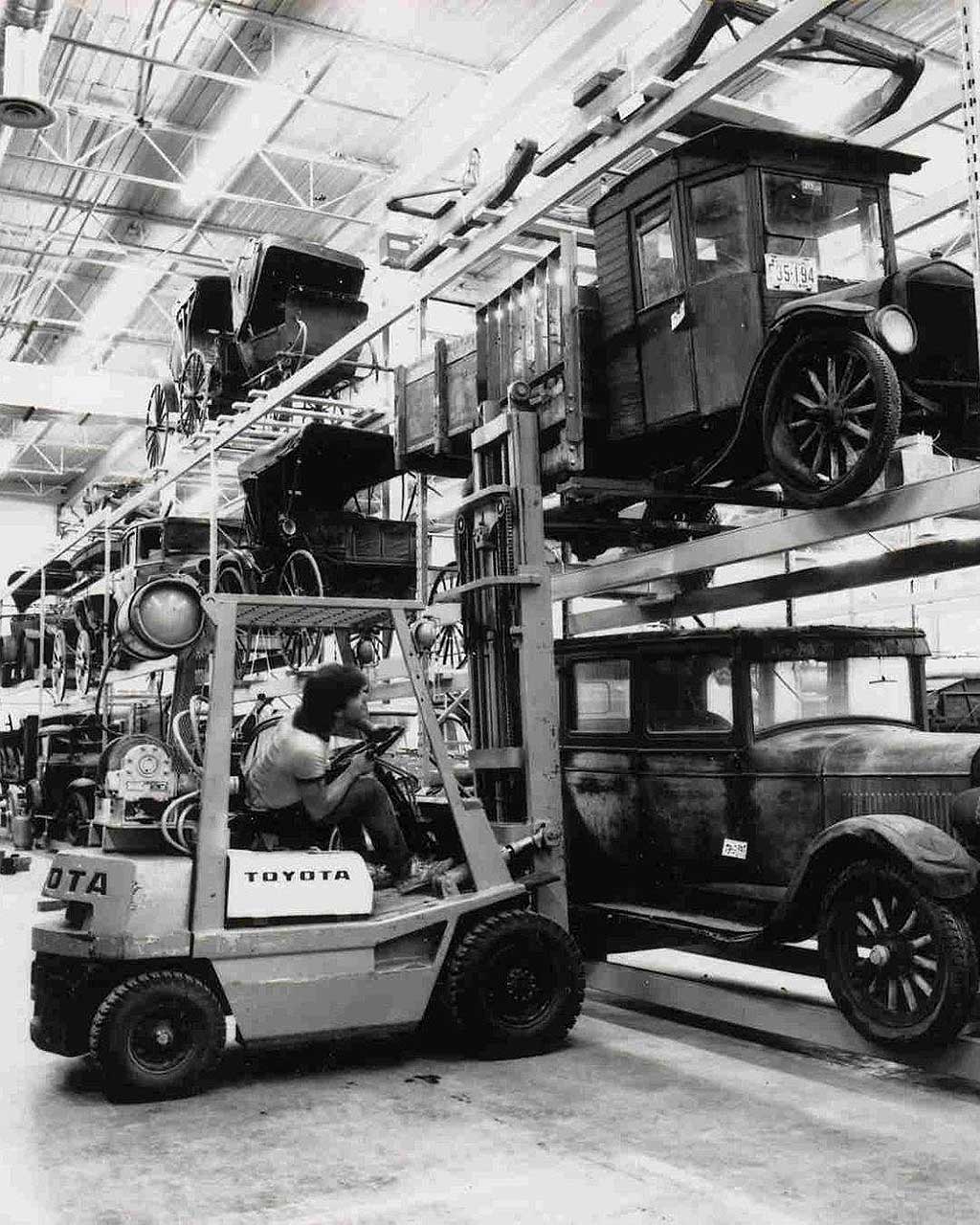
Curatorial and administrative staff move into the Provincial Service Centre in Saskatoon. This becomes the WDM’s headquarters, Curatorial Centre and storage for artifacts not on display. An addition to the Yorkton WDM provides administrative, curatorial, storage and shop space.
1986
North Battleford WDM opens its new exhibit wing.
1987
The WDM vacates the last off-site Second World War hangar used for artifact storage.
1988
Renovations to Saskatoon WDM public service areas are completed. Renovations to the Moose Jaw WDM public service areas are completed. The first WDM blacksmithing course is held at the head office in Saskatoon. The WDM hires their first professionally-trained conservator.
1989
The four Museum locations are recognized by theme and are named: Moose Jaw – History of Transportation North Battleford – Heritage Farm and Village Saskatoon – 1910 Boomtown Yorkton – Story of People The WDM celebrates its 40th Anniversary. The Saskatoon WDM initiates Harvestfest, a September threshing event.
1991
David Klatt is named WDM Executive Director.
1992
The Snowbirds Gallery opens at the Moose Jaw WDM.
1993
The Provincial Service Centre is renamed Curatorial Centre. The conservation laboratory is opened in the Curatorial Centre. North Battleford reopens the new exhibit wing and introduces the Discovery Area and theatre. An Exhibits Curator is hired and the development of the Exhibits Master Plan is re-initiated. Exhibit Master Planning Group (Warren Clubb, Rick Dixon, Ruth Bitner, Leslee Newman) asked by David Klatt to produce a WDM Exhibit Master Plan.
1995
Story Annotation List of the Exhibit Master Plan is produced by the Exhibit Master Planning Group.
1996
The WDM launches its first website. An Exhibit Master Plan is produced.
1997
Collections data management is transferred from the Canadian Heritage Information Network (CHIN) to a WDM in-house computer system.
1998
Two steel storage sheds are added in North Battleford to provide better storage for tractors and farm equipment. The WDM embarks on the first steam traction engine boiler replacement project.
1999
The WDM celebrates its 50th anniversary. The first class in buggy seat reconstruction and upholstery is held at the Curatorial Centre.
2001 – 2003
Planning proceeds for Winning the Prairie Gamble: The Saskatchewan Story, an exciting new exhibit planned to celebrate Saskatchewan’s centenary in 2005.
2004
In partnership with Saskatoon Public Schools, the WDM launches Celebrating Saskatchewan’s Heritage, a website that brings WDM research and archival material into classrooms for students and teachers.
In cooperation with the Saskatchewan Women’s Institute, formerly known as the Saskatchewan Homemakers’ Clubs, the WDM reprints the 1955 Golden Jubilee cookbook, From Saskatchewan Homemakers’ Kitchens, for sale in WDM gift shops for centennial year.
2005
In celebration of Saskatchewan’s centenary, the WDM undertakes a number of initiatives:
Phase one of Winning the Prairie Gamble: The Saskatchewan Story, a new centennial exhibit, opens at the four WDM locations.
A centennial quilt contest was held with 29 entries received from across the province. The four prize-winning quilts became part of the Museum’s new centennial exhibits.
The WDM commissions a play titled Winning the Prairie Gamble by renowned playwrights Geoffrey Ursell and Barbara Sapergia. The Persephone Theatre of Saskatoon tours the play to over 60 schools in the province as part of their youth tour.
In partnership with the Saskatchewan Archives Board, the WDM writes about and selects historical photographs to produce a publication called the Saskatchewan History Centennial Timeline.
2009
The WDM celebrates its 60th Anniversary. The exhibit Winning the Prairie Gamble: The Saskatchewan Story opens at all four WDM locations.
2011
Joan Champ is named Executive Director.
2012
The WDM releases You Are Not Alone, a book on the Museum’s paranormal activity.
2013
The WDM Curatorial Centre is featured in two episodes of The Other Side, an APTN television program on paranormal activity.
2014
The WDM celebrates 65 years of operation on April 6 (actual anniversary April 2).
The Fuelled By Innovation exhibit opens at the WDM Saskatoon.
2015
The WDM launches a new online library catalogue.
The WDM Saskatoon opens the Edwards Funeral Home exhibit on Boomtown Street.
Ruth Bitner, Collections Curator receives the 2015 Award of Distinguished Service by the Canadian Museums Association (CMA).
The roof is replaced at the WDM Yorkton.
The WDM Saskatoon is named the Number One Thing to Do in Saskatchewan for 2015 by TripAdvisor.
The WDM launches a new logo and tagline.
2016
Joan Kanigan is named Chief Executive Officer.
The WDM Saskatoon introduces Boomtown Pursuit, a digital scavenger hunt operated with your phone.
2017
The WDM launched the Saskatchewan LGBTQ2+ History Collection with the goal of creating a permanent collection of objects that tell stories about LGBTQ2+ life in Saskatchewan.
The Short Line track at WDM Moose Jaw is rebuilt.
The WDM Board of Directors approves new vision: A Saskatchewan where everyone belongs and histories matter.
Work begins at the WDM North Battleford to restore the 1158 locomotive.
2018
K+S Potash Canada is announced as the new 10-year sponsor of the Short Line at the WDM Moose Jaw.
The rebuilt short line track re-opens at the WDM Moose Jaw as the K+S Potash Canada Short Line 101.
The bell from the Vulcan locomotive is stolen from the WDM Moose Jaw.
A memorandum of Understanding (MOU) is signed with Spirit Wrestler Productions on a project to preserve the spiritual traditions of the Saskatchewan Doukhobor community.
In July the WDM Saskatoon announces the construction of a new parking lot.
2019
The Blairmore Ring is relocated to the entrance of the WDM Saskatoon.
WDM releases its Inclusivity Report: Reconciliation and Diversity at the WDM.
A good samaritan returns the bell from the Vulcan at the WDM Moose Jaw.
WDM Collection database (Argus) available to the public to search online.
Construction to rebuild the parking lot at the WDM Saskatoon was announced in July. Constrcution was completed and the parking lot was reopened in November of that year.
The WDM Saskatoon becomes home to an EV charging station for public use.
The WDM, in partnership with OUTSaskatoon and Saskatoon Pride, hosts the first-ever Spark Your Pride event celebrating 2SLGBTQ+ history and storytelling.
2020
Language Remediation Project begins answering TRC Calls to Action #43 and #67.
All WDM locations temporarily close in March due to the COVID-19 pandemic.
All summer shows and summer camps are cancelled due to the on-going COVID-19 pandemic.
All WDM locations re-open in August under provincial restrictions due to the continued COVID-19 pandemic.
The Western Development Museum, in partnership with Spirit Wrestlers Productions and the University of Saskatchewan, is honoured to be the recipient of the 2020 Governor General’s History Award for Excellence in Museums: History Alive! for The Saskatchewan Doukhobor Living Book Project.
2021
The WDM Saskatoon received federal and provincial funding through the COVID-19 Resilience Stream for upgrades to the public washrooms.
2022
Construction is completed of a gender neutral washroom at the WDM Saskatoon.
The WDM Saskatoon receives funding from PrairiesCan under the Canada Community Revitalization Fund and Canadian Heritage under the Canada Cultural Spaces Fund to make Boomtown Street more accessible to visitors.
A three-year sponsorship agreement is signed with BMO Financial Group to provide two free admission days annually at each WDM location. This agreement was renewed in 2025, extending BMO’s sponsorship to 2028.
Those Were the Days at the WDM North Battleford is rebranded as History in Motion.
On October 11 together with co-curator Whitecap Dakota Nation, the WDM opened Wapaha Sk̄a Oyate: Living Our Culture, Sharing Our Community at Pion-Era, 1955 – 69, a new permanent exhibit at the WDM Saskatoon.
2023
WDM CEO Joan Kanigan is recognized as a Top 20 Women Leader for 2023 by The Women’s Leader Magazine.
In May the WDM Saskatoon extends their operating hours until 8:00 pm on Thursdays.
The WDM and Whitecap Dakota Nation receive an Award of Merit from the Museums Association of Saskatchewan (MAS) for the Wapaha Sk̄a Oyate: Living Our Culture, Sharing Our Community at Pion-Era, 1955 – 69 exhibit.
Introduction to Blacksmithing and the WDM Moose Jaw’s partnership with Seniors’ Centre Without Walls receives Heritage Saskatchewan awards in the category of Living History.
The WDM introduces a Community Membership programs to engage with the non-profit sector.
2024
The WDM celebrates 75 years at all locations on April 2.
In April the WDM North Battleford is honoured by the Rivers West District for Sport, Culture & Recreation with a 2024 Volunteer Recognition Award in the category of Culture – Event.
In conjunction with the WDM’s 75th anniversary, an Adventure Passport is launched. People who visit each WDM location receive a stamp on their passport and a limited edition t-shirt.
In June the WDM announces the Past Forward: WDM Through the Decades Gala to take place in September at the WDM Saskatoon.
The WDM North Battleford opens the J. Marjan Shoe Shop in the Heritage Village in June.
The WDM hosts the Past Forward: WDM Through the Decades Gala celebrating 75 years of the WDM on September 12.
2025
With the Office of the Treaty Commissioner (OTC), a pop-up Treaty Timeline display is launched. The display is a history of Treaty-making in what is now Saskatchewan. It was developed by the OTC and redesigned by the WDM.
In April, the WDM welcomes its 10,000,000th visitor to the Museum since opening in 1949.
2026
The Board of Directors approves a new vision statement for the WDM: To embody Saskatchewan’s diverse cultural heritage and inspire curiosity in our shared histories.
