100 Years of Saskatchewan History
Indoor
Moose Jaw
100 Years of Saskatchewan History
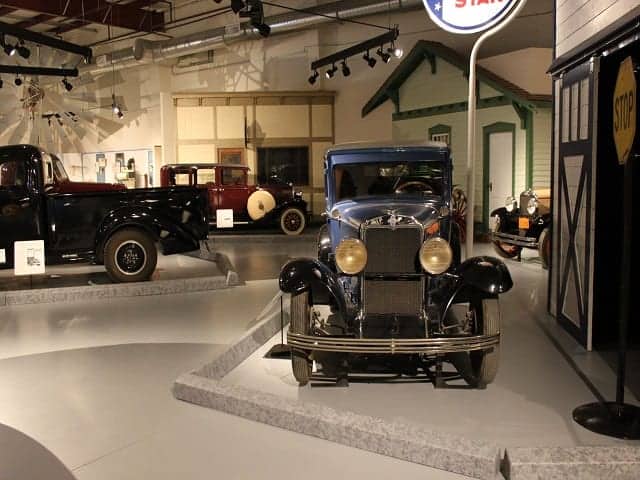
This exhibit celebrates 100 years of Saskatchewan. Events on the 1905 to 2005 timeline chronicle Saskatchewan achievements and challenges during the first 100 years of the province. Three special stories are explored in detail: Saskatchewan weather; the road to Medicare; and Saskatchewan transportation beyond the grid. The Saskatchewan Theatre celebrates Saskatchewan people and places.
Saskatchewan Theatre
Saskatchewan is not all flat. Saskatchewan is not all fields. Saskatchewan is forest and muskeg, bogs and fens, sand dunes and sloughs, rocks and lakes, hills and coulees. Nature has blessed us with a full pallette of colours and textures, shadows and light … all stretching beneath the biggest canopy of sky anywhere.
The WDM team working on the theatre project worked to capture that diversity, that immensity, that richness in the images we show in the Saskatchewan Theatre. Three unique presentations, accompanied by music created for 100 Years of Saskatchewan History, show the breath-taking grandeur of Saskatchewan.
The Saskatchewan Theatre is an elegant, intimate and welcoming space that invites visitors to view the province with new eyes. Authentic early 20th century theatre seating for 15, complete with ornate cast iron supports, are complemented by heavy velvet draperies and a decorative closed beam ceiling.
Six vignettes set into the theatre walls feature dress-up clothing for a night on the town.


Saskatchewan ABCs – Two Unique Shows
Photos taken around the province represent every letter of the alphabet. See images from WDM Photo Collections, Tourism Saskatchewan, the Gabriel Dumont Institute, the Saskatchewan Archives Board, Saskatchewan History & Folklore Society … to name just a few. Project curator Ruth Bitner contributed a host of her own shots taken on excursions around the province since the centennial year.
We mixed old and new, north and south, field and forest, animals and birds, and Saskatchewan people from all four corners of the province.
Everett Baker Shows Us Saskatchewan
In 1937, Everett Baker was hired as a field man for the Saskatchewan Wheat Pool, a job he held for 25 years. In 1939 he bought a camera and his life took a new turn. He continued with the Pool, but his joy became photography as he chronicled Saskatchewan in the 1940s, 1950s and 1960s when most people in Saskatchewan lived on farms and in rural communities.
Everett Baker shows us Saskatchewan during the mid-years of the last century. We thank the Saskatchewan History & Folklore Society for sharing Baker’s photos with us.
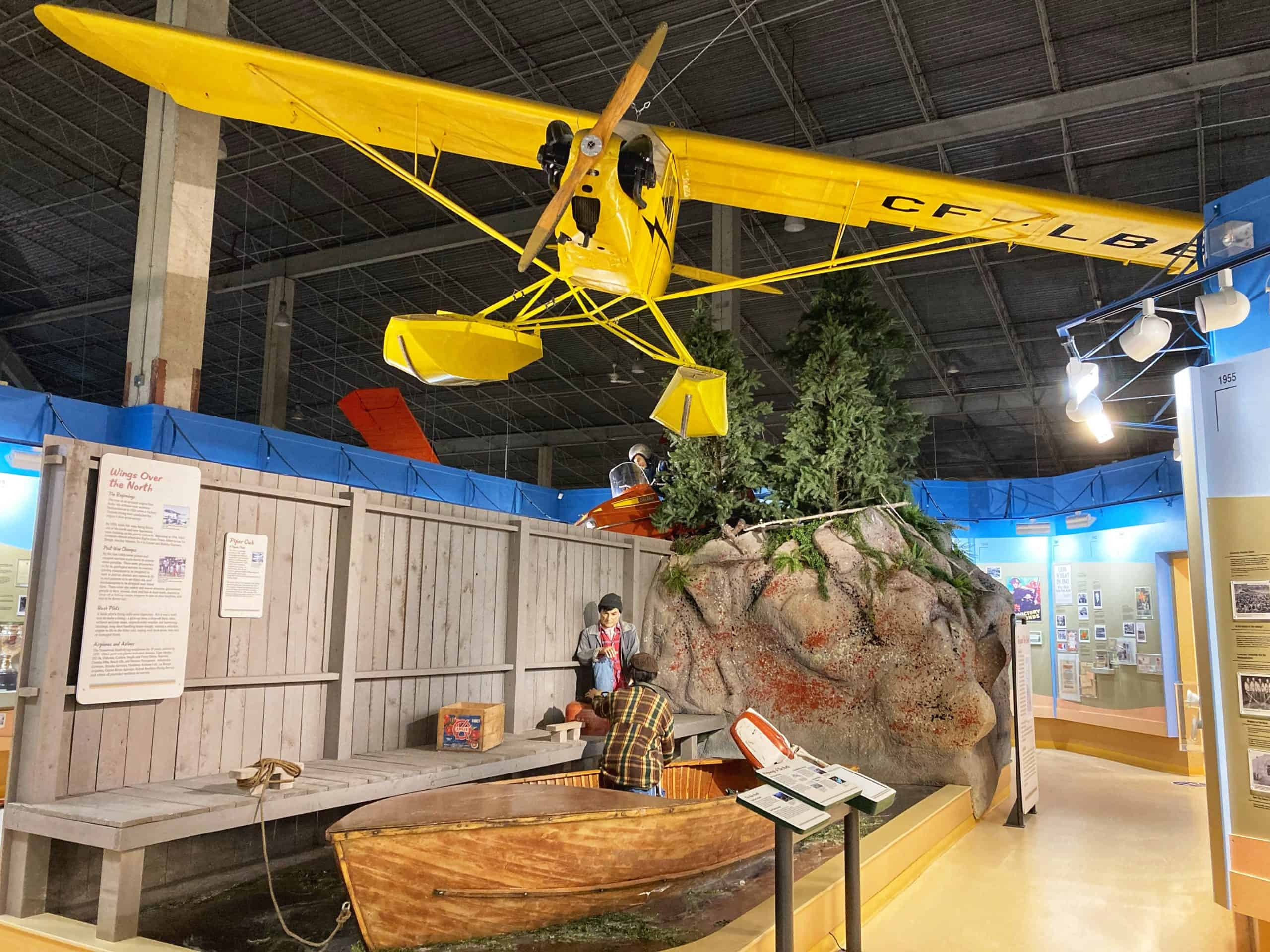
Piper Cub J-3
A Popular Plane
The Piper J-3 Cub made its debut in 1938. Small, strong, light, and relatively inexpensive, it was extremely popular as a training plane. Although production ended in 1947, the J-3 remained in demand for decades. In Saskatchewan, the Cub was handy for getting to northern fishing camps, for training pilots and for sport flying but it was too small for passenger service or hauling freight.
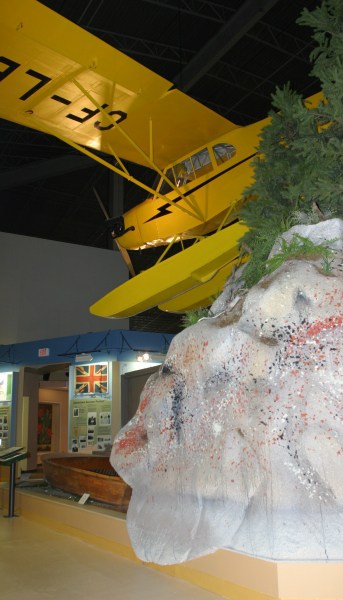
This replica Piper J-3 Cub was built by the Vintage Aircraft Restorers here at the Moose Jaw WDM. The authentic Wollam floats were typical of those used with Piper Cubs on the lakes of northern Saskatchewan in the late 1940s and early 1950s. Because the floats were made of wood, they required constant maintenance and few survived.
100 Year Timeline
See artifacts, photos, and video representing the events and trends which shaped and affected Saskatchewan since 1905.
Did you know? Cedoux, a community north of Weyburn, was on the receiving end of Canada’s largest recorded hailstone in 1973. The baseball-sized stone weighed 290 grams (over ½ pound) and measured 114 mm (4 ½ inches) in diameter.