100 Years of Saskatchewan History
Indoor
North Battleford
100 Years of Saskatchewan History
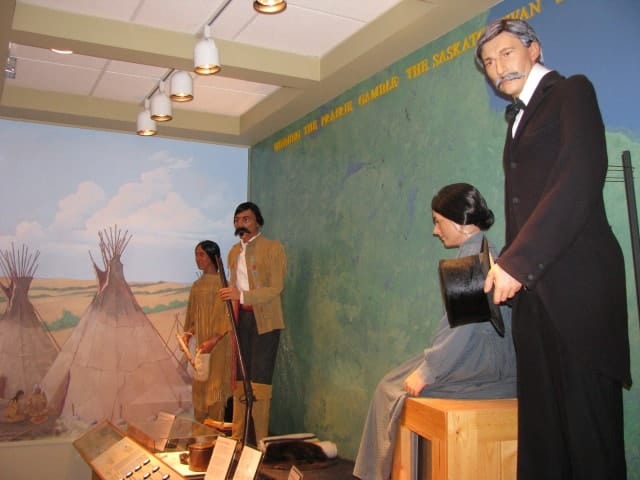
This exhibit celebrates 100 years of Saskatchewan. Events on the 1905 to 2005 timeline chronicle Saskatchewan achievements and challenges during the first 100 years of the province. Scan the northern forests and minerals underground in a display of Saskatchewan natural resources. The Theatre celebrates Saskatchewan people and places.
Born with a Drum – Education Among First Nations
In 2002, an exhibit on First Nations education, including a history of residential schools, was suggested by Elders at a workshop organized by the Saskatchewan Indigenous Cultural Centre (SICC) and held at the WDM Saskatoon. In a 1993 publication, A Dené Perspective, it is said the child is born with a drum in its hand. This reflected the Elders’ wisdom shared at the workshop and so it was chosen as the exhibit title. Based on the Elders’ guidance, SICC and WDM researchers developed an exhibit storyline, which incorporates five strands:
1. a general introduction to First Nations education;
2. traditional learning;
3. Treaty right to education;
4. Residential schooling; and
5. the future of First Nations education.
The exhibit reflects a tipi, with artifacts, photographs, artwork, maps and information around the outside of the structure. Inside, an audio-visual presentation introduces Museum visitors to words spoken in English, French, Cree, Dené, and Saulteaux.
Artifacts include a drum, a replica of a Treaty medal, dolls dressed in Residential school uniforms made by Dora Stevenson of Fort Qu’Appelle, student items from the Saskatchewan Indian Institute of Technologies and the First Nations University of Canada, and a sculpture entitled Pre-Mysteries carved in 2005 by Mervin Dieter of the Peepeekisis First Nation. A large map shows First Nations linguistic groups, Treaty areas, and the First Nations in Saskatchewan.

Natural Resources
A hillside diorama tells two stories about Saskatchewan’s natural resources: forestry and mining.
Forestry
One half of Saskatchewan is forest; it is a major industry in the province. This part of the exhibit showcases the beginning of the forestry industry in the province, First Nations use of the forest is told, along with facts like the Big River sawmill was, at one time, the biggest in the British Empire. Details explore the lives of men on an early 20th century log hauler crew, the age of steam power and ice roads.
Mining
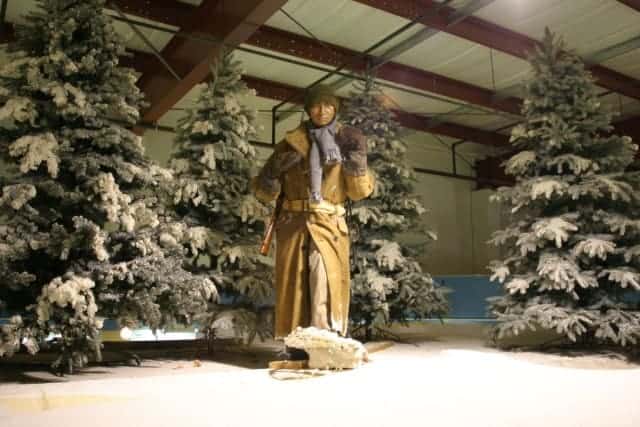
Hidden under the snow-covered hill is an underground mining exhibit which features potash, coal, uranium and other types of mineral extraction. Visitors go “underground” through a simulated “elevator,” a motion chamber, giving an illusion of descent. Children can enter on hands-and-knees through a “gopher hole,” a tunnel in the hillside reminiscent of the holes for coal dug by settlers in southeastern Saskatchewan. A door at the end of the diorama provides alternate entrance and exit. The Saskatchewan stories of coal, potash, uranium and other mining are told within the underground cavern.
Geologic history has endowed Saskatchewan with a wealth of natural resources. Both renewable and non-renewable resources continue to grow in importance to the province. Saskatchewan firsts and foremosts, along with Saskatchewan innovations, have made world-wide contributions.


Saskatchewan Theatre
Saskatchewan is not all flat. Saskatchewan is not all fields. Saskatchewan is forest and muskeg, bogs and fens, sand dunes and sloughs, rocks and lakes, hills and coulees. Nature has blessed us with a full pallette of colours and textures, shadows and light … all stretching beneath the biggest canopy of sky anywhere.
The WDM team working on the theatre project worked to capture that diversity, that immensity, that richness in the images we show in the Saskatchewan Theatre. Three unique presentations, accompanied by music created for 100 Years of Saskatchewan History, show the breath-taking grandeur of Saskatchewan.
The Saskatchewan Theatre is an elegant, intimate and welcoming space that invites visitors to view the province with new eyes. Authentic early 20th century theatre seating for 15, complete with ornate cast iron supports, are complemented by heavy velvet draperies and a decorative closed beam ceiling.
Six vignettes set into the theatre walls feature dress-up clothing for a night on the town.


Saskatchewan ABCs – Two Unique Shows
Photos taken around the province represent every letter of the alphabet. See images from WDM Photo Collections, Tourism Saskatchewan, the Gabriel Dumont Institute, the Saskatchewan Archives Board, Saskatchewan History & Folklore Society … to name just a few. Project curator Ruth Bitner contributed a host of her own shots taken on excursions around the province since the centennial year.
We mixed old and new, north and south, field and forest, animals and birds, and Saskatchewan people from all four corners of the province.
Everett Baker Shows Us Saskatchewan
In 1937, Everett Baker was hired as a field man for the Saskatchewan Wheat Pool, a job he held for 25 years. In 1939 he bought a camera and his life took a new turn. He continued with the Pool, but his joy became photography as he chronicled Saskatchewan in the 1940s, 1950s and 1960s when most people in Saskatchewan lived on farms and in rural communities.
Everett Baker shows us Saskatchewan during the mid-years of the last century. We thank the Saskatchewan History & Folklore Society for sharing Baker’s photos with us.
100 Year Timeline
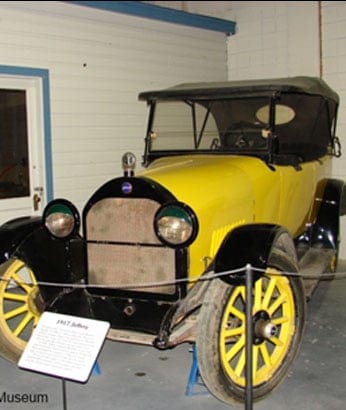
See artifacts, photos, and video representing the events and trends which shaped and affected Saskatchewan since 1905.
Did you know? Cedoux, a community north of Weyburn, was on the receiving end of Canada’s largest recorded hailstone in 1973. The baseball-sized stone weighed 290 grams (over ½ pound) and measured 114 mm (4 ½ inches) in diameter.